NTC Featured Courses
Our specialized courses
We offer more than 80+ specialized courses with different learning approaches from face to face learning to virtual classes.
We offer more than 80+ specialized courses with different learning approaches from face to face learning to virtual classes.
Stay connected with stories, events, and innovations shaping maritime training.
_9187062526011159.png "Carrying More Than Cargo: How Filipino Seafarers Navigate Risk, Responsibility, and a Changing Maritime World")
Every day, thousands of vessels traverse the world's oceans carrying food, fuel, medicine, raw materials, and consumer goods that keep economies moving. Behind every successful voyage are seafarers whose work often goes unseen yet remains indispensable to global trade.
For Filipino seafarers, this responsibility carries even deeper meaning. They do not simply transport cargo. They carry responsibility, resilience, and the weight of a global economy that depends on their skill and discipline.
Capt. Edgar Inocencio, Head of Nautical Research and Development at Norwegian TrainingCenter and a seafarer with 31 years of sailing experience, underscores this responsibility, “More than 80% of world trade is transported by sea, so we have the responsibility of ensuring that cargo reaches its destination safely, efficiently, and on time.
”Similarly, Capt. Alberto Aguila, a Norwegian Training Center instructor who spent 43 years at sea, describes seafarers as “the backbone of the world industry.” Reflecting on the importance of maritime transport, he notes, “Because if we stop for a week, the whole world will be paralyzed.”
Behind the goods that support economies and sustain everyday life are seafarers whose work keeps the world connected.
More Than a Job at Sea
The maritime profession has always demanded sacrifice. Months spent away from loved ones, missed family milestones, and extended periods in isolated environments have become part of the reality of life at sea.
Yet today's challenges extend far beyond time away from home. Modern seafarers operate increasingly advanced vessels while adapting to new technologies, evolving regulations, and growing environmental responsibilities.
At the same time, they face significant risks. According to Capt. Inocencio, crews must be prepared to respond to severe weather, equipment failures, navigation hazards, fires, collisions, medical emergencies, and machinery breakdowns while maintaining safety at all times.
Capt. Aguila also highlighted fatigue as one of the industry's ongoing challenges. Tight schedules, demanding cargo operations, and the pressure to avoid costly delays can place significant demands on crew members.
Beyond physical risks, long periods away from family and the pressures of life at sea can also affect a seafarer's mental and emotional well-being, underscoring the importance of strong support systems both onboard and ashore.
The Role of Training and Lifelong Learning
As the maritime industry continues to evolve, training has become more important than ever. Continuous learning, practical exercises, simulation-based training, and exposure to emerging technologies help prepare seafarers for the realities of modern shipping.
“Training is extremely important because it prepares seafarers to respond confidently and correctly during real emergencies,” says Capt. Inocencio. “Through realistic simulations and continuous drills, we develop the technical skills, decision-making ability, teamwork, and leadership needed to protect lives, the vessel, the cargo, and the environment.
”Capt. Aguila shares the same view, emphasizing that training helps build both competence and confidence, ensuring seafarers are prepared to meet the challenges of an everchanging maritime environment.
Carrying the Future of Global Trade
This International Day of the Seafarer, it is important to look beyond the cargo being transported and recognize the people who make global trade possible.
Filipino seafarers remain among the world's most trusted maritime professionals, known for their expertise, resilience, and unwavering commitment to excellence.
They carry world trade.
They carry responsibility.
They carry risks.
Through continuous support, training, and investment in their well-being, they help steer the future of global shipping toward safer, more sustainable horizons.
Today, we honor the men and women whose dedication keeps the world connected, reminding us that behind every successful voyage is a seafarer carrying far more than cargo.
_8156062326094000.png "The Sailing Success of NTC ETO Alumni")
Behind every vessel sailing across oceans is someone ensuring that every electrical and electronic system onboard operates safely and efficiently. Electro-Technical Officers (ETOs) are highly skilled professionals whose work requires technical expertise, adaptability, and resilience.
After completing their shipboard training, the Electro-Technical Officer (ETO) alumni of the Norwegian Training Center (NTC) return to the institution to submit their completed Training Record Book (TRB) for validation. This marks a key milestone in their professional journey, followed by a Competency Assessment conducted at NTC. Held after shipboard training, this assessment is an important step in determining their readiness for professional certification and future practice as ETOs.
At this stage, their experiences onboard begin to take shape into the competencies and lessons that will guide them as they move closer to becoming Electro-Technical Officers.
Adjusting to Life at Sea
Gwen Artero of NTC ETO Cadet Batch 9 entered her first contract with little time to fully prepare for the emotional demands of life onboard. Serving onboard for nine months, she experienced homesickness and emotional difficulty during her early months, especially as she was away from her child. Being the only woman onboard at the start of her contract also added to the challenge.
Despite these early struggles, Gwen gradually found her rhythm at sea. Over time, she was able to adjust to the shipboard environment and emphasized that building good relationships with crew members played a major role in helping her cope with life onboard. She also described ETO work as unpredictable, with troubleshooting tasks that require constant learning. For her, the profession continues to be a journey of both career development and personal growth.
Learning Through Hands-On Experience
Similar to Gwen’s adjustment to shipboard life, hands-on exposure also played a key role in shaping the experience of other cadets like Lyster Villaruel of NTC ETO Cadet Batch 11. His cadetship was defined by practical training and mentorship onboard. Working with an ETO officer and assistant electrician, he was given the opportunity to actively participate in electrical tasks, which helped him gain confidence and technical skills.
His experience onboard was further supported by a positive working environment, where crew welfare and teamwork were prioritized despite long working hours. This supportive atmosphere helped him adjust smoothly from land-based life to shipboard operations, making his transition easier than expected. With this foundation, he now looks forward to becoming a full ETO and applying the knowledge and skills he gained during training and onboard exposure.
Discovering a New Career Path
Building on these varied cadet experiences, Edison Jr. Sablay of NTC ETO Cadet Batch 9 shares a different entry point into the maritime industry, one that he did not initially plan. For Edison, the ETO profession was something he only discovered after college during the pandemic. Coming from an Electrical Engineering background, he became interested after learning about the opportunity to work internationally in the maritime industry.
His transition to ship life came with an initial culture shock, particularly in working with people of different nationalities. Communication and cultural adjustment became important parts of his learning process onboard. Over time, he adapted, completed his 14-month cadetship, and found the experience rewarding and meaningful. Now, he aims to become fully independent in his role as an ETO, capable of handling responsibilities confidently and ensuring smooth contracts at sea.
Building Future Maritime Professionals
The stories of NTC ETO alumni reflect more than technical training. They highlight resilience, adaptability, and continuous learning shaped by real-life experiences onboard ships.
From Gwen’s adjustment to ship life, to Lyster’s hands-on technical development, and Edison’s discovery of a maritime career path, each journey shows how becoming an ETO is both a professional and personal transformation.
As they continue their careers at sea, their experiences stand as a testament to how challenges onboard shape stronger and more capable maritime professionals.
Marking this significant milestone, we extend our heartfelt congratulations to the NTC ETO alumni for successfully passing their ETO assessment and earning their Certificate of Competency (COC), a defining achievement that signifies their readiness to move forward with confidence as fully prepared Electro-Technical Officers in the global maritime industry.
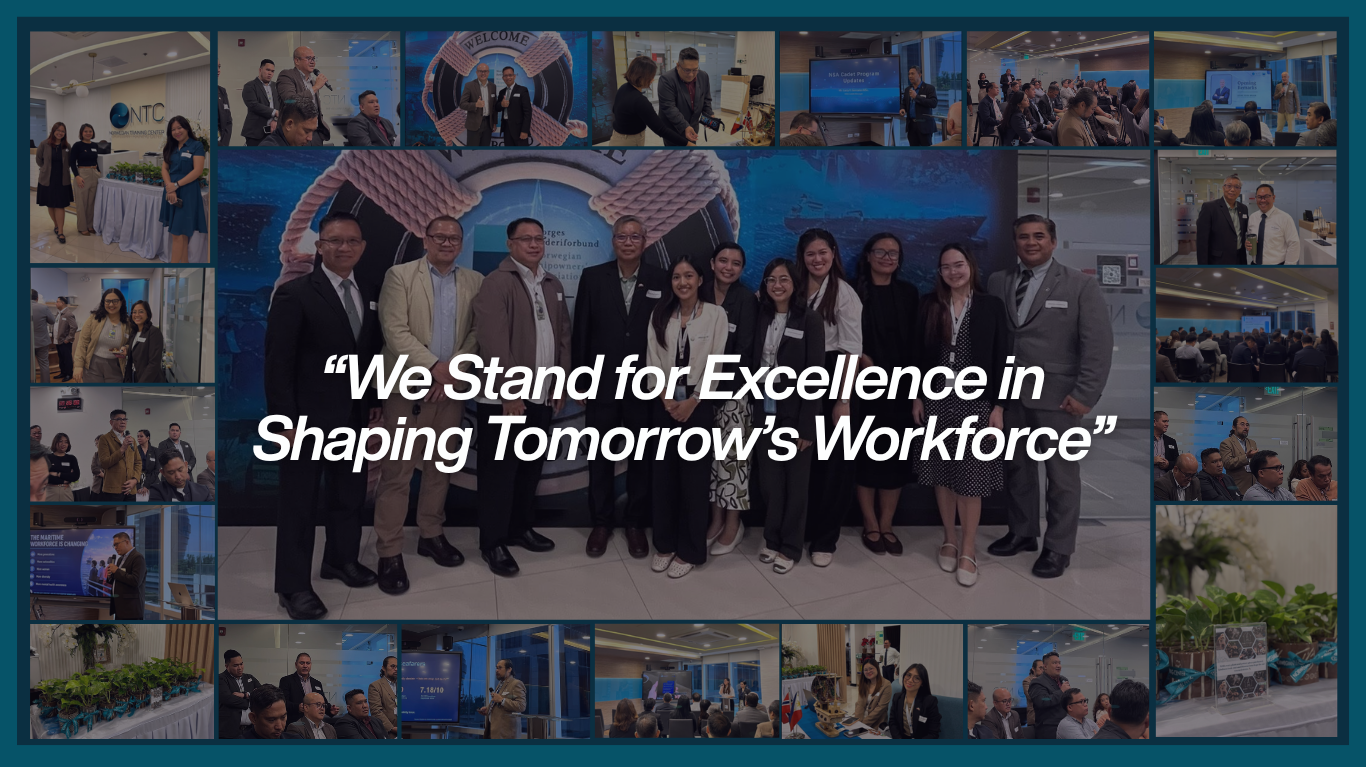
How often do we communicate, yet fail to truly connect? How many valuable insights go unheard because there is no platform to share them? In an industry driven by people, technology, and constant change, are we listening enough to the voices that navigate its future?
These questions underscore the importance of meaningful dialogue and collaboration, which served as the foundation of the NSA-NTC Clients Forum 2026.
Formerly known as the NSA-NTC Clients Meeting, this gathering marked a shift with its transition into a Clients Forum. Beyond a change in name, it embraced a more open, discussion-driven approach, creating a platform where every voice was heard, and every insight mattered. This reflects NSA-NTC’s commitment to strengthening partnerships through engagement, collaboration, and the exchange of ideas that drive the maritime industry forward.
The forum opened with discussions on developing future-ready marine engineers through specialized technical and electrical training, with Engr. Emmanuel Se. Participants explore how industry-focused programs, including reefer technicians training, continue to bridge the gap between evolving operational requirements and onboard competencies.
Building on this, Capt. Sherwin Bacolcol examined a growing industry concern in the second session, focusing on the rising trend of early career exit among seafarers. Discussions highlighted that this challenge goes beyond manpower concerns, pointing instead to a broader issue of human sustainability. Emphasis was placed on leadership, workplace culture, career development, and employee well-being in creating an environment where maritime professionals feel supported and valued throughout their careers.
The conversation further highlighted the importance of investing in the next generation of maritime professionals through insights shared by Sir Larry Gonzales. Updates on the NSA Cadet Program showcased ongoing efforts for aspiring seafarers, preparing them for the demands and opportunities of a dynamic maritime industry.
As workforce expectations evolve, Mr. Michael Jimenez, licensed psychologist, also explored wider themes such as mental health awareness, generational inclusion, and the value of diverse perspectives in maritime operations. These discussions reinforced that a resilient workforce depends not only on technical competence, but also on environments where individuals can grow, contribute, and belong.
Beyond the discussions, NSA-NTC’s commitment to extending its impact beyond the maritime sector was also evident. As a special initiative, guests received potted plants sourced from Pawttery, a social enterprise supporting animal welfare. Proceeds from Pawttery products help provide care for rescued dogs, allowing the forum to contribute to a meaningful cause while promoting sustainability and community engagement.
Overall, the exchange of ideas reinforced a shared understanding: shaping tomorrow’s workforce requires continuous learning, strong leadership, meaningful partnerships, and a genuine commitment to people.
NSA-NTC extends its sincere gratitude to all partners, speakers, and participants whose engagement made this Clients Forum a success. Together, we continue to shape opportunities, strengthen the workforce, and advance a shared vision of excellence in shaping tomorrow’s maritime professionals.